

Stop Wasting Money on Summer Food Plots. Do This Instead.
Every May, the same conversation happens at deer camp. Someone’s hauling in bags of cow peas and soybeans, sweating through a food plot that’s going to either get hammered by drought or eaten down to nothing by August. And the guy who just tagged a 150-inch 8-pointer three years running is out back, doing absolutely nothing to his property. Do summer food plots matter?
The dirty secret in deer hunting is that summer food plots — while not useless — are one of the least efficient investments you can make on your property. Deer have been thriving on landscapes without a single tractor pass for thousands of years. The research backs this up, and once you understand what deer actually need from June through August, you’ll spend your time and money a lot differently.
Here’s what the science says — and how to put it to work before velvet hardens
What Deer Are Actually Eating Right Now
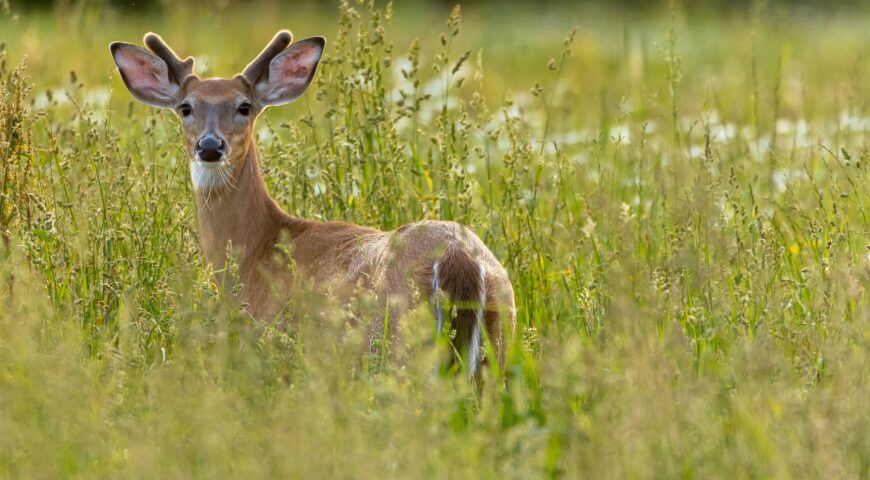
From June through August, a whitetail’s summer diet is dominated by forbs — broad-leaved flowering plants that aren’t grasses. University of Missouri extension research found that forbs can comprise up to 70 percent of a deer’s diet during spring and summer. Not clover. Not soybeans. Forbs.
The list includes plants most hunters walk right past:
- Common ragweed (Ambrosia artemisiifolia) — 16-18% crude protein, one of the most protein-dense wild forages available
- Giant ragweed (Ambrosia trifida) — reaches 15 feet tall, provides both food and security cover
- Pokeweed (Phytolacca americana) — highly palatable to deer in its early growth stages
- Desmodium spp. (beggar’s lice) — a native legume deer key in on all summer
- Wild lettuce — abundant in disturbed areas, highly digestible
Deer also hit agricultural fields hard — particularly soybeans during their vegetative stages, when protein content peaks above 20%. And on properties with established mast trees, soft mast like wild persimmon (Diospyros virginiana) and early-ripening crabapple starts pulling deer off their summer beds as early as late August in southern states.
The takeaway: food is not the limiting resource for most deer during summer. If your property has any early successional habitat, field edges, or timber with decent understory, there’s probably more natural food out there than you realize. Perhaps summer food plots for deer are not all they are made up to be.
Summer Food Plot Alternatives That Actually Move the Needle
1. Let Sections Go Weedy (Seriously) Instead of Summer Food Plots
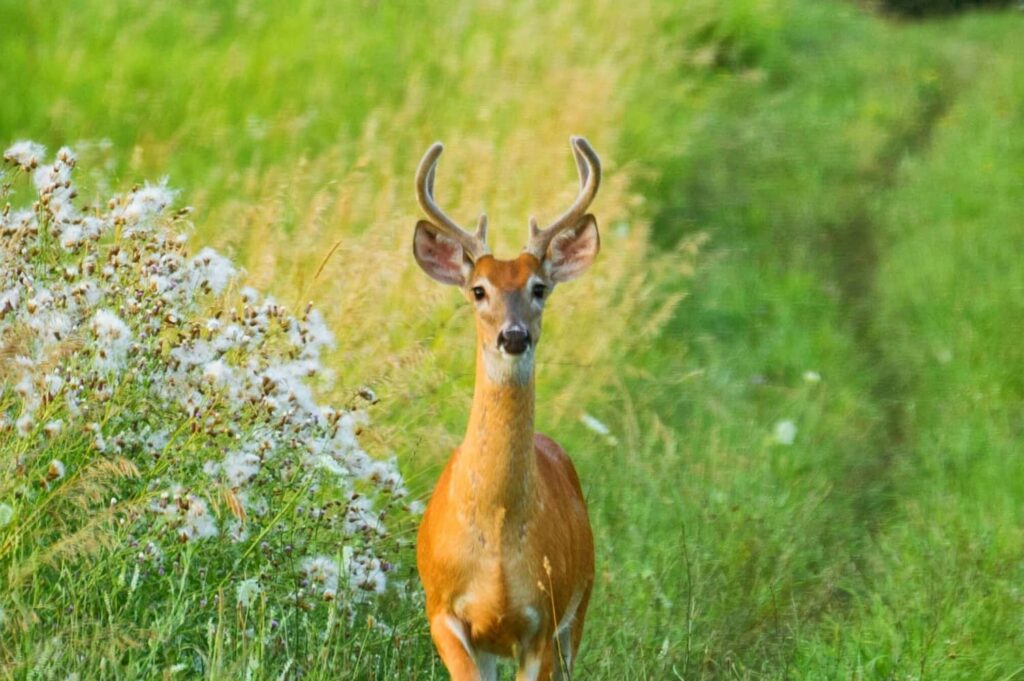
This is the lowest-effort, highest-return move in deer habitat management. Pick 1-3 acres — old CRP ground, a fallow corner of a field, an idle food plot — stop mowing it, and walk away.
Within two growing seasons, you’ll have a diverse forb community pulling out of the existing seed bank: ragweed, wild lettuce, old field aster (Symphyotrichum spp.), desmodium, and native legumes. This “go weedy” approach consistently generates forage testing at 13-15% crude protein, and unlike a monoculture food plot, the diversity keeps deer coming back throughout the entire summer rather than hammering one species down early.
Enhance it by disking every 2-4 years to reset succession and keep forb density high. That’s the whole management plan.
2. Timber Stand Improvement (TSI)
If you have timber, this is arguably the best long-term habitat investment you can make. The concept: selectively remove non-mast species to let sunlight hit the forest floor, triggering browse production from 0-6 feet where deer actually feed.
When you drop those “junk trees” — the inferior hardwoods crowding your oaks and hickories — tender growth from young oak sprouts (Quercus spp.), hickory (Carya spp.) saplings, and native shrubs explodes in the newly available light. This browse is exactly what deer want, and it’s growing right next to their bedding cover.
TSI also improves your long-term mast production. Plan on returning to treated areas every 10 years to manage regeneration.
3. Soft Mast Trees Along Travel Corridors
Persimmons, crabapples, and pears planted along established travel corridors are a one-time investment that pays hunting dividends for decades.
A few things worth knowing:
- Persimmons require male and female trees for fruit production — plant both, space them 20-30 feet apart
- Crabapple varieties like Dolgo and Centennial handle Zone 4-5 winters, hardy to -50°F, and produce heavy fruit loads reliably
- Early-season ripening varieties — Gala apples in the North, Early Golden persimmons in the South — drop fruit in August-September when it matters most for hunting
Place 2-4 trees initially where you already know deer travel, then expand by 2-4 trees per year. Bare-root trees planted in spring (after a 12-24 hour root soak) establish better than container stock. Protect them from browse pressure while they’re young.
By year 4-5, a mature fruit tree can produce 50+ pounds of fruit annually — and it never needs replanting.
4. Water Sources
Dry summer periods push deer to travel 0.5-2 miles to reliable water. That’s movement happening somewhere that isn’t your property.
A simple stock tank, maintained water guzzler, or developed natural spring can anchor deer to your ground during drought periods. Research supports that a reliable open water source during summer can be “as critical for drawing and keeping deer as summer food plots.”
Keep it clean. Stagnant, algae-choked water will push deer away instead of drawing them in. If you’re installing something new, locate it within 200 yards of existing bedding cover so deer can hydrate without a commute.
5. Edge Feathering vs. Summer Food Plots
Deer are edge animals. The transition zone between forest and field — especially a “soft edge” that transitions gradually over 10-20 yards through shrubby growth — concentrates more activity per acre than almost any other habitat feature.
Hinge-cutting select trees along field or food plot borders creates instant edge structure: the fallen tree provides browse, the opened canopy drives forb growth underneath, and the tops of the felled trees become cover and bedding sites. You can implement this with a chainsaw in a weekend, and the results show up on trail cameras within weeks.
Why Summer Nutrition Is a Fall Hunting Problem
Here’s the thing most hunters miss: what happens in July determines what you’re hunting in October.
For bucks: Antler growth peaks from April through July, with mature bucks potentially growing 1.5 inches of antler per week during peak velocity. Mississippi State University research established that bucks need roughly 16% crude protein from spring through summer for optimal antler development. A Texas study comparing controlled protein levels found that bucks on 16% protein diet scored approximately 20 inches higher on Boone and Crockett than matched-age bucks on 8% protein. Twenty inches. That’s the difference between a shooter and a pass.
For does: Lactation peaks 4-8 weeks after fawning (mid-June to July for most of the country), but nutritional demand doesn’t peak until 12-16 weeks post-fawning — meaning does are running on a nutritional deficit at the exact moment fawn growth accelerates. Does with access to high-quality summer forage produce heavier, more cold-hardy fawns. Those fawns show up in your herd as recruits the following year.
Summer nutrition isn’t a luxury. It’s deer season, starting three months early. Minerals and quality food sources matter.
How to Scout Without Summer Food Plots
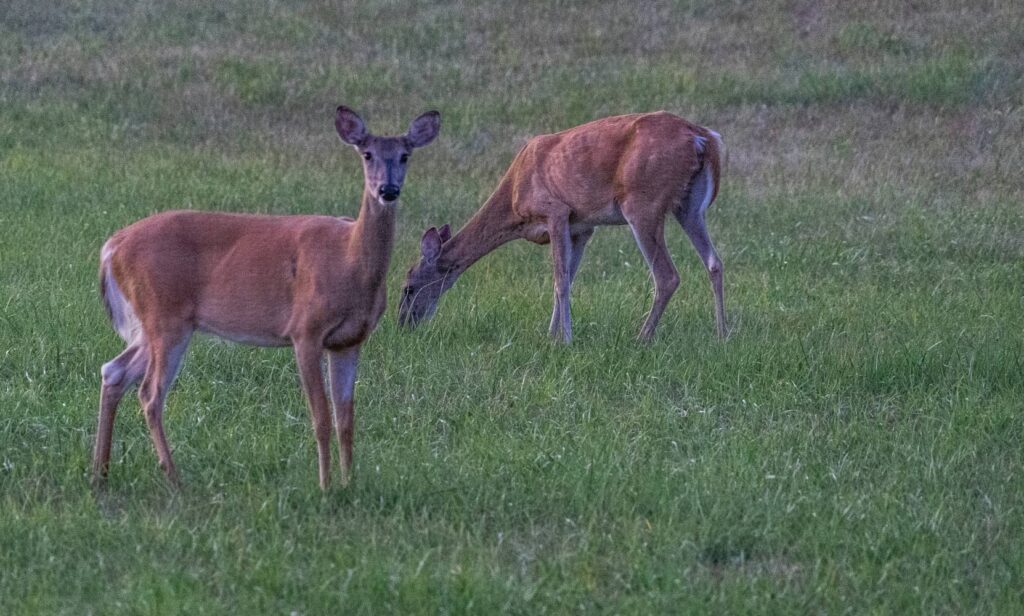
Summer is when patterns are predictable. Bucks are in bachelor groups, moving in daylight to feed, running home ranges that can contract to as little as 60-200 acres when food quality is high nearby. You can watch them.
Glass from distance. Position in elevated ground overlooking field edges and openings during the last 2 hours of daylight in July. Note specific individuals, where they enter fields, and which direction they came from. Mark GPS waypoints for every consistent entry point.
Drop cameras on soft mast. If you have wild persimmons or crabapples on the property, put a camera on them now. Summer bachelor groups will be hitting them by late July in southern states.
Log what you see in TrophyTracks. Every observation you log this summer feeds TrophyPredict AI — the AI that generates percentage-based probability of animal movement for your specific locations. The more summer data you put in, the sharper those predictions get come September. Hunters using TrophyTracks have logged over 18,000 journal entries. That community data, combined with your personal location history, is what makes the AI Sighting Forecast on your spots increasingly accurate each season.
When you build out your Hit List for the fall — the bucks you’re targeting — anchor those entries to locations near your soft mast trees or your best natural food edge. TrophyGuide AI will build your game plan around those locations as you approach season, pulling from your historical data to tell you not just when to hunt, but when NOT to (those conditions to avoid save as many tags as good sits do).
The Bottom Line with Summer Food Plots
Summer food plots have their place. If you’ve got irrigated soybeans on a managed property and the budget to maintain them, run it. But for most of us hunting farm country, public edges, or timber ground — the money you’d spend on seed, diesel, and soil amendments will go further somewhere else.
Native forbs, timber work, soft mast trees, water, and edge habitat cost less, require less maintenance, and produce more diverse forage than most plots. They also create the kind of habitat that holds deer on your property all season long — not just when your plot is producing.
Start one project this summer. Even one water source, one section of let-it-go ground, or two persimmon trees along a trail you already hunt. Then use TrophyTracks to document the results. The data you build this offseason is what makes your AI predictions sharper come opening day.
Be at the right spot at the right time — and now you know how to build that spot without creating summer food plots.
Frequently Asked Questions
What do deer eat most during summer?
During summer (June-August), deer primarily eat forbs — broad-leaved flowering plants — which can make up 70% of their diet. Top summer forages include ragweed, pokeweed, desmodium (beggar’s lice), wild lettuce, clover, and the vegetative growth of soybeans. Agricultural crops and early-ripening soft mast like persimmons also attract significant summer deer activity.
Do summer food plots grow big bucks?
No. Research shows that native early successional vegetation often provides higher forage quality and diversity than planted food plots. Bucks need approximately 16% crude protein for optimal antler growth, which many native forb communities naturally provide. Alternatives like native forb areas, timber stand improvement, and soft mast trees can be more effective and less expensive than traditional food plots.
How does summer nutrition affect antler size?
Summer is when antler growth is fastest — mature bucks can grow 1.5 inches per week during peak growth in June-July. Research from Mississippi State University and Texas studies shows bucks on 16% protein diets grow antlers scoring 20+ inches higher on Boone and Crockett than bucks on poor nutrition. What they eat in July literally determines what you’re looking at through your scope in October.
What soft mast trees are best for deer?
The best soft mast trees for deer depend on your region. In the South: American persimmon (Diospyros virginiana), with Early Golden and John Rick varieties ripening in September. In the North: crabapples (Dolgo, Centennial varieties are cold-hardy) and early-ripening apple varieties. Plant at least two persimmons (one male, one female) for pollination. Position trees along existing travel corridors for maximum hunting benefit.
Can I use TrophyTracks to track summer deer activity?
Yes — and you should. Summer journal entries and sightings logged in TrophyTracks feed the TrophyPredict AI, which generates probability-based movement forecasts for your specific locations. The more historical data you build, the more accurate your AI Sighting Forecast becomes. Logging summer observations and stand-site scouting now gives TrophyRecall AI the context to match future weather conditions against your past success data come fall.
How much land do bucks cover during summer?
Summer home ranges are typically the smallest of any season. On properties with quality food and cover nearby, mature bucks often maintain core areas of 60-200 acres. NDA research shows poor habitat can force home ranges up to 640-754 acres even for yearling bucks. High-quality summer habitat keeps deer compressed and predictable — the recipe for early-season success.